
The Oldest Medicine: Massage Therapy
By William Mathis, AntiFragile Physical Therapy
Healing touch is the oldest of medicines. Powerfully effective, largely free of side effects, and bolstered by both ancient tradition and cutting-edge science. It’s always been with us, and the stage is set for a historic rebirth of epic proportions.

My Personal Experience with Massage Therapy
Asthma almost killed me when I was five. I woke up in the night unable to draw breath. This stressed my parents quite a bit, and they rushed me to the ER. A sleepless night of epinephrine-fueled hallucinations followed, but at least I could inhale. After a second occurrence, I began to see an allergist. In addition to the shots, which I didn’t care for, and the drugs, which I hated, he prescribed massage - specifically percussion, suggesting that my parents basically do a bunch of karate chops all over my back.
My parents beat me like a drum, and I could breathe again. The percussion massage helped clear my lungs. Unlike my allergy meds, it also felt great. This was my first experience of complementary (as opposed to “alternative”) medicine, and I liked it.
Many years later my Grandmother was approaching death. This sweet, gently feisty woman’s memory was fading – memories of her childhood or the Great Depression were crystal clear, but a conversation five minutes ago was as insubstantial as smoke. But she would remember when I had massaged her hands, the embodied experience of warmth and life force reminding her of a time when she didn’t feel an arthritic ache.
“My hands feel warm. Could it be because of the massage?” she’d ask, not remembering the spiel I’d given her on the benefits of massage a few minutes before.
“Could be, Grandma,” I’d say, with a chuckle, “could be.”
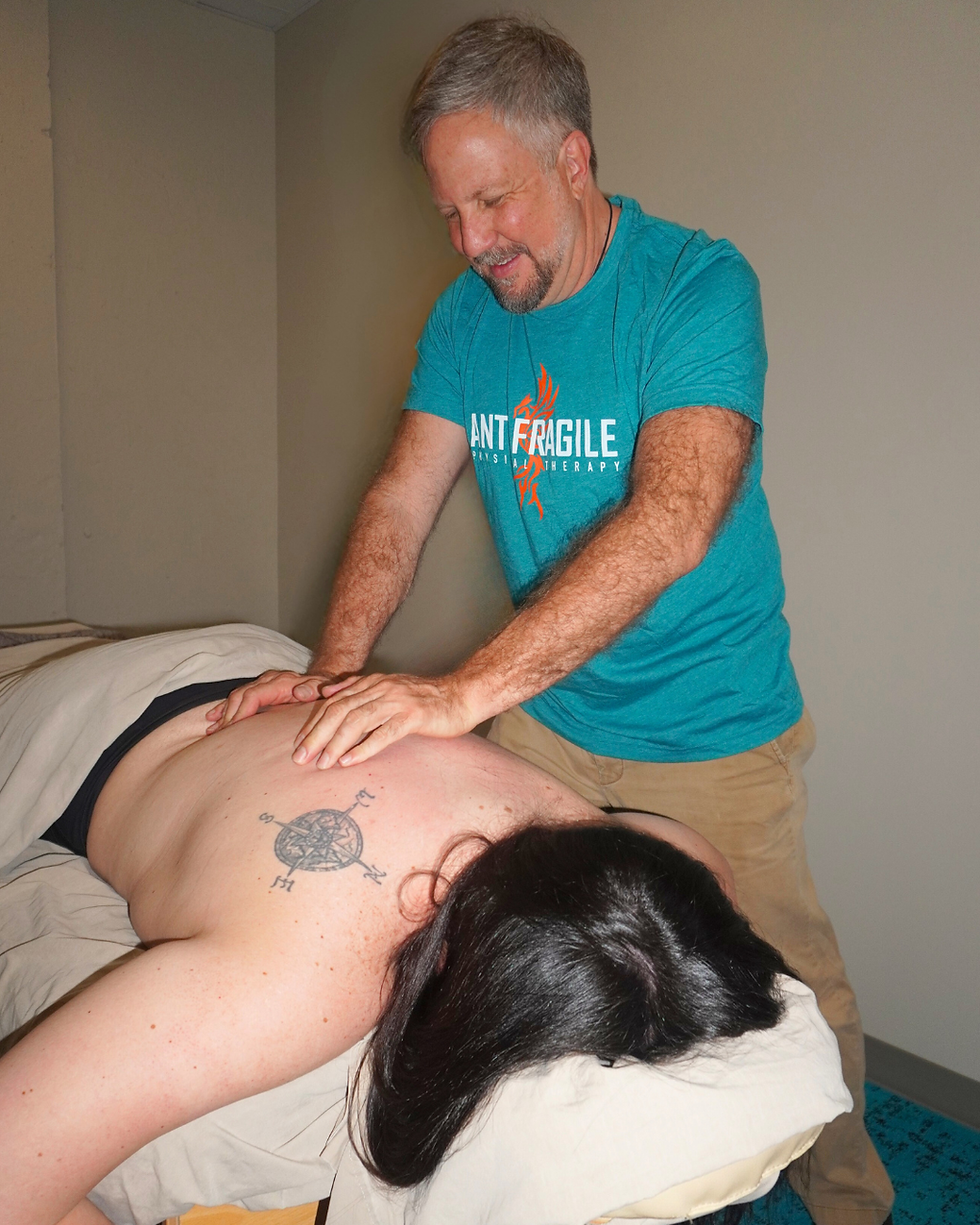
The Power of Touch Brackets Our Lives
The birth experience welcomes us into the world with a massage via the birth canal, stimulating the immune system. Babies who are held, hugged, cuddled, and generally lovingly touched thrive, develop faster, and are measurably happier than those who are not. Sadly, as the history of early 20th century orphanages shows, babies who are not touched and held sicken, weaken, and often die. (Happily, when the problem was recognized, additional caregivers were hired and the orphans’ health improved dramatically)
Touch is a need. We can endure a lack of air for seconds to minutes, go without water for days, starve for food for weeks if we must. How long can we go without touch before we are permanently damaged? Loss of another sense – sight or hearing, for example - can be coped with and overcome, but loss of the sense of touch can be psychologically devastating.
Our experience of healing touch is primal. Other mammals also touch, cuddle, pummel for milk, and lick their wounds. You don’t have to teach a human child to use touch to relieve pain: they will rub, blow on, or shake their boo-boos to reduce the pain without prompting. They may not understand the neurology involved, but they eagerly use it nonetheless.

History of Massage Therapy
Every human culture makes use of therapeutic touch. Perhaps it was written down or taught formally, perhaps not. Either way it’s ubiquitous: Egypt, China, Japan, Thailand, Hawaii, Indigenous North, Central, and South America, Europe, Africa, Australia… the list goes on. One of the amazing things about the modern world is that an individual could probably receive, or even learn to perform, Hawaiian Lomi-Lomi, Thai Nuad Boran, a Swedish session, or an American-made sports massage without even leaving their home town.
The ancient traditions speak often of the healing power of touch. The Bible speaks of laying on hands. Hippocrates, “father of western medicine”, taught that massage was essential to the well-trained physician. The foundational text of Chinese Medicine, the Nei Jing, discusses indications and techniques for therapeutic massage.
And now modern scientific research is validating what the ancient healing traditions say about massage and the power of the body to heal itself. In fact, the results of scientific study of massage benefits are nothing less than mind-blowing: massage affects us down to the genetic level. Recent research shows that massage therapy creates an epigenetic effect in muscle cells, turning off the cellular mechanisms that unleash inflammation. That means less pain, quicker recovery from injury, improved movement, and better athletic performance.

Modern Massage Therapy
Modernity brings blessings as well as curses! The “diseases of affluence” - lifestyle diseases such as obesity, heart disease, diabetes, and depression - constitute some of our most pressing health problems.
Chronic inflammation is a major component of many of these ailments; chronic stress is another. In fact, inflammation and stress exacerbate the symptoms of a dizzying variety of diseases. Massage can reduce stress and inflammation, meaning it can theoretically support the body’s self-healing mechanisms for some of our culture’s biggest health woes, with virtually no side effects!
No drug can match that efficacy; the oldest medicine is still the best medicine.
Of course, massage is not appropriate for every health issue (if you have a serious health condition, talk to your doctor before receiving massage therapy), but the list of conditions for which massage is indicated continues to grow. For example, just a few years ago, massage was not recommended for people with cancer – but more recent research has shown that it can be not only safe, but also extremely effective, reducing stress, pain, fatigue, nausea, and depression. Stated broadly, when we feel better, we heal better.

The Bottom Line
If you are reading this article, odds are that you have a spiritual center to your life, and an interest in helping make the world a better place. Perhaps you are considering a life path in the healing arts, drawn to a right livelihood in harmony with your values. If so, now is the time to heed the call!
Massage therapy is one of the fastest-growing careers – a profession that by its nature can’t be outsourced overseas or replaced by robots. And as massage therapy continues to make inroads into the mainstream consciousness around health and wellness, the opportunities will continue to grow. The oldest medicine has always been with us, essential to the human experience… and it’s making an impact like never before.
How Can AntiFragile Help
At AntiFragile, massage therapy is one of the many tools we use to support movement, recovery, and long-term health. Whether you're looking to recover from training, manage chronic tension, or simply feel your best, our team can help determine if massage therapy is a good fit for your goals.
Interested in learning more? Contact us to schedule a session and experience the benefits of therapeutic massage firsthand.


Comments